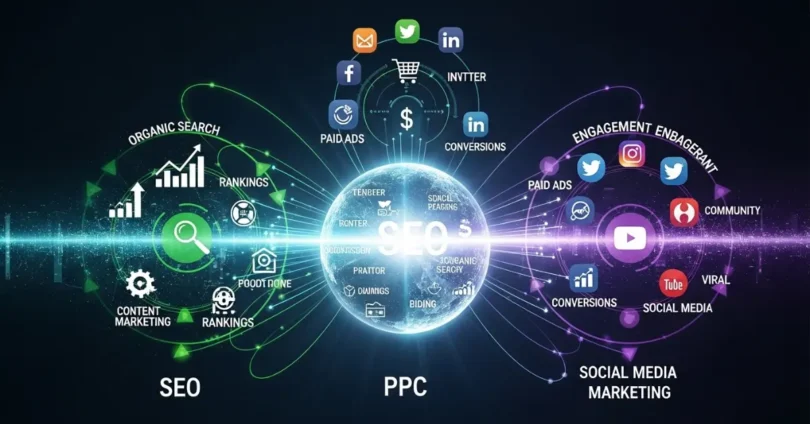
This is where SEO PPC and Social Media Marketing play an important role. These three digital marketing methods help businesses increase website traffic, improve brand awareness, and generate more sales. SEO helps your website appear in search engine results, PPC allows you to run paid ads for quick traffic, and Social Media Marketing helps you connect with people on platforms like Facebook and Instagram. When used together, SEO PPC and Social Media Marketing create a powerful strategy that helps businesses succeed in the online market.
Understanding SEO (Search Engine Optimization)
SEO is the process of optimizing your website so that it ranks higher in search engine results. People often use Google or Bing to find products or services, and SEO ensures that your business appears in these search results.
Why SEO is Important
- Increases organic website traffic
- Builds long-term online visibility
- Helps establish trust and authority
- Reduces marketing costs compared to paid ads
- Supports other marketing strategies like PPC and social media
Types of SEO
- On Page SEO: Optimizing elements on your website, such as titles, headings, content, images, and URLs.
- Off Page SEO: Building backlinks from other websites to improve your website authority.
- Technical SEO: Ensuring your website loads fast, is mobile-friendly, and has proper indexing for search engines.
Step by Step SEO Process
- Keyword Research: Find the right keywords your target audience is searching for. Tools like Google Keyword Planner or Ahrefs help identify high traffic keywords.
- Competitor Analysis: Study your competitors to see which keywords they rank for and how you can outperform them.
- Website Optimization: Optimize your website’s meta tags, headings, content, and images for selected keywords.
- Content Creation: Write high quality, helpful content that answers user questions and uses keywords naturally.
- Link Building: Get backlinks from authority websites to improve credibility and search ranking.
- Performance Tracking: Use Google Analytics and Search Console to monitor traffic, rankings, and user behavior.
Understanding PPC (Pay-Per-Click Advertising)
PPC is a digital advertising model where you pay each time someone clicks on your ad. It is a fast way to drive targeted traffic to your website.
Why PPC is Important
- Instant visibility on search engines
- Drives targeted traffic immediately
- Easy to control budget and performance
- Works well with SEO to increase overall traffic
Popular PPC Platforms
- Google Ads: Show ads on Google search and display networks.
- Bing Ads: Advertise on Microsoft’s search network.
- Facebook Ads: Reach audiences based on interests, demographics, and behavior.
- Instagram Ads: Promote content visually to a younger audience.
Step by Step PPC Campaign Setup
- Set Marketing Goals: Define what you want to achieve, e.g., sales, leads, or brand awareness.
- Target Audience Selection: Choose demographics, location, interests, and behavior for precise targeting.
- Keyword Selection: Pick high converting keywords for search campaigns.
- Ad Copy Creation: Write compelling ads with clear calls-to-action.
- Budget and Bidding: Decide daily or monthly budgets and set bidding strategy.
- Campaign Launch: Publish your ads and ensure all tracking codes are in place.
- Monitor and Optimize: Regularly check performance and make adjustments for better results.
Understanding Social Media Marketing
Social Media Marketing (SMM) is the process of using platforms like Facebook, Instagram, Twitter, LinkedIn, and YouTube to connect with audiences, increase engagement, and promote products or services.
Benefits of Social Media Marketing
- Builds brand awareness and loyalty
- Drives traffic to your website
- Engages directly with potential customers
- Helps gather customer feedback
- Supports SEO and PPC campaigns
Popular Social Media Platforms
- Facebook: Best for wide audience reach and community building.
- Instagram: Ideal for visual marketing and younger audiences.
- Twitter/X: Useful for quick updates, trending topics, and news.
- LinkedIn: Perfect for B2B marketing and professional audiences.
- YouTube: Video marketing to educate, entertain, and convert users.
Step by Step Social Media Marketing Strategy
- Define Target Audience: Understand who your ideal customers are.
- Choose Platforms: Focus on platforms where your audience is most active.
- Create Content Plan: Decide what types of posts to share: text, images, videos, or polls.
- Design Attractive Posts: Use eye-catching visuals, infographics, and videos.
- Post Consistently: Maintain a schedule to stay visible to followers.
- Engage With Audience: Reply to comments, messages, and mentions to build trust.
- Analyze Results: Track likes, shares, comments, clicks, and conversions to improve performance.
Comparing SEO, PPC and Social Media Marketing
| Feature | SEO | PPC | Social Media Marketing |
|---|---|---|---|
| Cost | Low (mostly time) | Medium to High (paid ads) | Low to Medium (ads optional) |
| Time for Results | Slow (weeks to months) | Fast (immediate) | Medium (days to weeks) |
| Traffic Type | Organic | Paid | Social/Referral |
| Long-term Benefit | Yes | No (stops when budget ends) | Yes |
| Best for Beginners | Moderate | Easy | Easy |
Combining SEO, PPC and Social Media for Maximum Growth
Using all three strategies together maximizes results:
- SEO + PPC: Use PPC for immediate traffic while SEO grows organically.
- SEO + Social Media: Share optimized content on social platforms to attract more visitors.
- PPC + Social Media: Run targeted ads to promote campaigns and retarget audiences.
- Full Funnel Strategy: Capture leads through ads, engage on social media, and convert via SEO-optimized content.
Common Mistakes to Avoid
- Ignoring keyword research
- Spending money without strategy in PPC
- Not posting consistently on social media
- Focusing on only one channel
- Not monitoring analytics regularly
- Over-optimizing content and ads
- Using low-quality content for SEO or social media
- Ignoring mobile optimization
- Expecting instant results from SEO
- Neglecting audience engagement
Best Tools for SEO, PPC and Social Media Marketing
SEO Tools:
- Google Analytics
- Ahrefs
- SEMrush
- Moz
PPC Tools:
- Google Ads Editor
- Bing Ads Dashboard
- Facebook Ads Manager
Social Media Tools:
- Hootsuite
- Buffer
- Canva (for graphics)
- Later (for scheduling posts)
Analytics Tools:
- Google Data Studio
- Hotjar
- Sprout Social
Future Trends in SEO, PPC and Social Media Marketing
- AI and Automation: Smart bidding, AI-generated content, and chatbots.
- Voice Search Optimization: Optimizing content for Siri, Alexa, and Google Voice.
- Video Content Growth: Short-form videos dominate social media engagement.
- Mobile-First Marketing: Mobile-friendly websites and ads are more important than ever.
- Interactive Content: Polls, quizzes, and live sessions for audience engagement.
Conclusion
SEO PPC and Social Media Marketing are three powerful digital marketing strategies that every business must use. SEO provides long-term organic growth, PPC offers immediate traffic and quick results, and Social Media Marketing helps build engagement and brand loyalty. When used together, they create a complete digital marketing ecosystem.
Learn SEO basics, set up simple PPC campaigns, and consistently post on social media. Track results, avoid common mistakes, and always adjust strategies according to performance. With patience and consistent effort, businesses of any size can grow online using these strategies.